At the very beginning, it must be said that no matter which silverfish you find in your home, you can definitely get rid of them. So no worries!
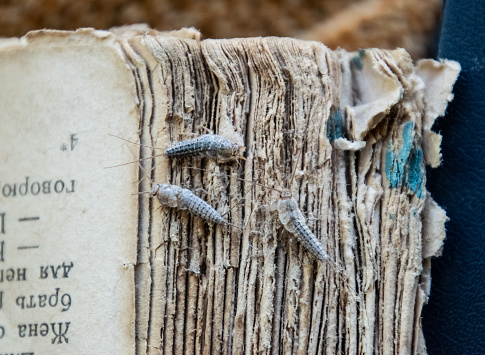
Every now and then, uninvited guests appear in our apartments. Harmless in themselves, silverfish are quite a familiar sight to many on our floors. Swiftly moving silverfish often move in the dark mostly on or near floors, wet rooms, but if the population is large they can spread more widely into living spaces. The silverfish start moving when the lights are turned on and slyly starts to hide in various nooks and crannies, under moldings and carpets. The long-tailed silverfish, which is related to the silverfish, is tougher than a silverfish and lives all over the house
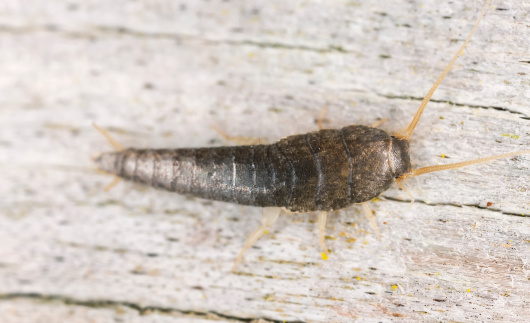
Long-tailed silverfish look very similar to silverfish, but they behave a little differently and the appearance is also a little different. The younger long-tailed silverfish and the silverfish resemble each other a lot in appearance. The silverfish has a slightly shinier surface than the long-tailed silverfish, but otherwise they look quite the same and often they get mixed up. As time passes and the larvae grow, the differences start to become more visible. The long-tailed silverfish is wingless and, as an adult, is grayer in color and has a duller surface than the silverfish. When younger, the long-tailed silverfish is darker.
A long-tailed silverfish grows from a nymph to an adult in approx. 1.5-3 years. Growth rate depends on available food and conditions such as temperature. They can last up to 8 years.
A long-tailed silverfish can grow very large, approx. 0,8 inches (2 cm) long, and as an adult is a little hairier than a silverfish. The long-tailed silverfish has three long tails on its back and two long antennae on its head. The significant difference is that the long-tailed silverfish does not run away as easily when you turn on the lights. It thrives mainly in the dark, but may move during the day where it wants and is generally a more skilled climber than its relative the silverfish. The long-tailed silverfish can be seen basking in the sun on the floor or even climbing up the wall. The long-tailed silverfish also thrives in dry homes, but can also live well in damp places. For this reason, the fact that they thrive better in different conditions than the silverfish makes them more difficult to get rid of.
The long-tailed silverfish uses dust, carbohydrate- and protein-rich food, flour, breadcrumbs, cereals and various scraps for food. Starchy food is particularly tasty, for example potatoes and paper, also insects and hair. They are therefore very omnivorous.
Long-tailed silverfish move and climb quite smoothly, so moving from one apartment to another can happen surprisingly easily. They can move from one place to another with clothes, bags, etc. It is also said that they can arrive at the apartment with various e-commerce orders, for example in cardboard boxes. In multi-storey buildings, you can move from one apartment to another through different electricity etc. lines and under the doors.
The long-tailed silverfish does not tolerate high temperatures and dies at temperatures above 120 F (50 C). Their functions slow down in colder rooms. You can’t get rid of long-tailed silverfish by cleaning, but of course general cleanliness does not provide such favorable growth conditions. In addition, it is easier to spot them in a clean apartment. A long-tailed silverfish can just as easily settle in a clean or a messier apartment, because it is omnivorous and will surely find something to eat in any apartment.
There are good substances for exterminating long-tailed silverfish that you can spray yourself. As long as you remember to carefully read the instructions for use and protect yourself and other family members in the right way. If the population is small or you rarely see them, you can manage with your own help and systematic action. However, if you notice more movement in your home, it is recommended to use professional help to eliminate them.
These insects are completely harmless, do not bite and are also known to spread no diseases under normal conditions. If there are only a few silverfish, you can get rid of them without professional help with the right procedures. Long-tailed silverfish are a bit more persistent than their relatives in leaving our living spaces. Therefore they require more persistent and preferably early intervention, so that the population does not grow so large and in which case getting rid of them would be faster.
Good news is for those who don’t like them so much, both silverfish and long-tailed silverfish can be gotten rid of with the right procedures and the right substances.